Emergency Driver Service: Getting to Hospital Without the Panic
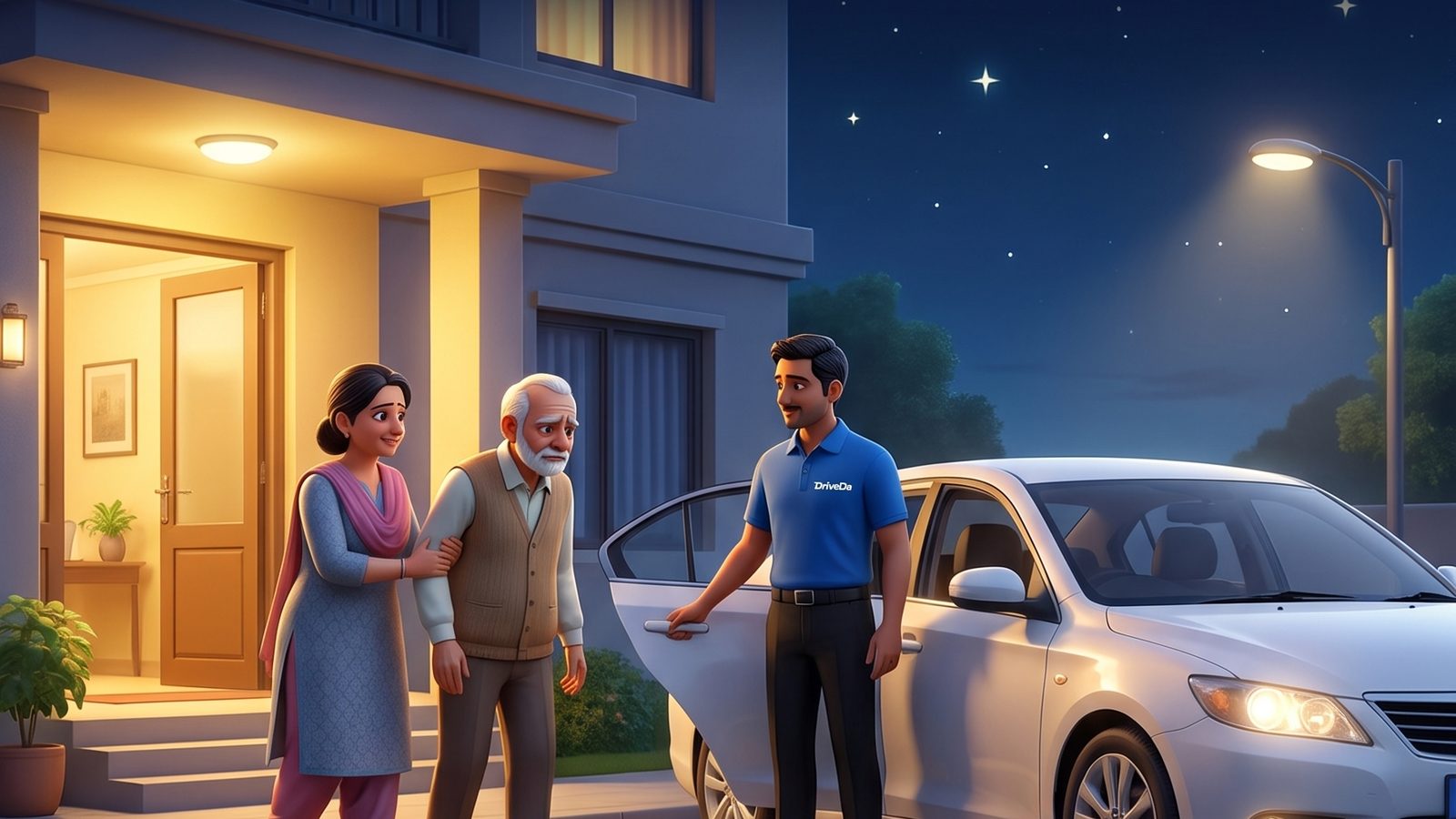
The worst time to work out how to get someone to hospital is while it is happening. Someone is unwell, the household is panicking, and the person who would normally drive is either shaking too much to be safe or is the patient.
This guide is about the ordinary medical emergencies - a parent whose blood pressure has crashed, a fever that has spiked at 3 AM, a fall in the bathroom. Read it now, so you are not reading it then.
Read this first. A driver is not an ambulance. If there is chest pain, difficulty breathing, stroke symptoms, heavy bleeding, seizure, or unconsciousness, call an ambulance on 102 or 108 immediately. Those situations need medical equipment and trained paramedics during transit, not a car. A driver is for the large middle category - urgent, frightening, but where a normal car ride is medically fine.
When a driver is the right call
- An elderly parent needs to be seen tonight but is stable and able to sit up.
- A high fever in a child or adult that needs a doctor now rather than in the morning.
- A minor injury - a deep cut, a suspected fracture in a limb - needing stitches or an X-ray.
- Post-operative complications where the hospital has told you to come in.
- You are too distressed to drive safely. This is a legitimate reason and not a weak one. Driving a familiar route while frightened is genuinely dangerous.
How fast can a driver actually reach you
Between 10 PM and 6 AM, roads are clear and arrival is often faster than daytime - typically 15-30 minutes across most of Delhi NCR, sometimes less in Gurgaon and South Delhi. During daytime peak, assume 25-45 minutes.
If that is not fast enough for the situation you are looking at, that is your signal to call an ambulance instead. Do not spend twenty minutes waiting for a driver when the answer was 102.
Prepare now, not later
Ten minutes of preparation today removes most of the chaos on the night. Keep these together somewhere everyone in the house knows about:
- The app installed and your account registered on the phones of every adult in the house. Not just yours - you may be the patient.
- Your home address saved correctly, with the gate or tower number. Fumbling an address while panicking is a real delay.
- A written list of the two nearest hospitals with emergency departments, and which of your insurance is cashless at each.
- A folder with each family member's medical history summary, current medications, allergies, blood group, and insurance card.
- Cash in a fixed place. Some hospital counters and parking still refuse UPI at 3 AM.
What to tell the driver
Be direct. "This is a hospital trip, we need to leave immediately, the patient is elderly and will need help getting into the car." That single sentence tells him to hurry, to drive smoothly rather than fast, and to be ready to physically assist.
Name the hospital and the entrance. "Medanta, emergency entrance" routes better than "Medanta". Many large NCR hospitals have separate OPD and emergency gates several hundred metres apart.
Getting an elderly or unwell person into the car
- Front passenger seat, reclined slightly, is usually easier to get into than the rear for someone with limited mobility.
- Sit down first, then swing both legs in together. Do not try to step in one leg at a time.
- Someone should sit beside the patient if the back seat is used, to steady them on turns.
- Bring a bag - medicines, documents, phone charger, a bottle of water, a shawl. Emergency rooms run cold and slow.
Why your own car helps here
In a medical situation, your own vehicle is worth a lot. The seat position is familiar, a wheelchair or walker fits in a boot you have used before, and you are not negotiating with a cab driver about whether he wants to take an unwell passenger. Your car stays at the hospital with you for however long you are there, and takes you home at 4 AM when getting a cab from a hospital car park is its own problem.
For non-emergency medical routine - dialysis, chemotherapy, physiotherapy, regular check-ups - a scheduled arrangement works better than emergency booking. Our guide to drivers for elderly parents covers that in detail.
Keep a driver a tap away
Register now so that when you need a driver at 2 AM, booking takes ten seconds instead of ten minutes.
Sign Up FreeFrequently asked questions
Should I book a driver or call an ambulance?
Call an ambulance on 102 or 108 immediately for chest pain, breathing difficulty, stroke symptoms, heavy bleeding, seizures, or unconsciousness - those need paramedics and equipment during transit. A driver is appropriate for urgent but stable situations: high fever, minor injuries, an elderly parent who needs to be seen tonight, or when you are too distressed to drive safely.
How quickly can a driver reach me at night in Delhi NCR?
Typically 15-30 minutes between 10 PM and 6 AM, since roads are clear - often faster than daytime. During peak daytime traffic expect 25-45 minutes. If that is too slow for the situation, call an ambulance instead.
What should I keep ready in advance for a medical emergency?
The app installed and registered on every adult's phone in the house, your home address saved with gate or tower number, a written list of the two nearest emergency hospitals with cashless insurance details, a folder of medical history and medications per family member, and cash in a fixed place.
Can the driver help my elderly parent get into the car?
Yes - tell him at the time of booking that the passenger needs assistance. Say it explicitly rather than assuming, so he arrives prepared to help rather than staying at the wheel.